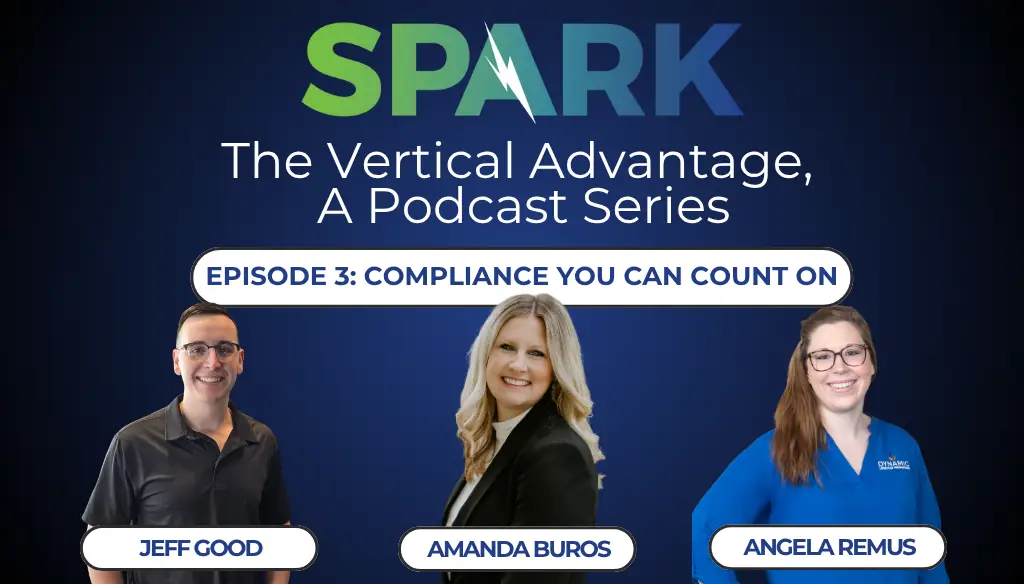
How Compliance Creates Clarity, Confidence & Value in Electronics Recycling
In this episode of The Vertical Advantage, Dynamic’s VP of OEM Solutions, Amanda Tischer Buros, explores how compliance in electronics recycling and IT asset disposition (ITAD) goes far beyond checking boxes. Joined by Compliance Partner Jeff Good and OEM Compliance Specialist Angela Remus, the conversation reveals why compliance is really about trust, transparency, and operational confidence.
Discover how Dynamic’s vertically integrated model simplifies certifications, streamlines audits, ensures secure chain of custody, and helps OEMs and enterprises navigate complex EPR requirements.
What you’ll learn:
How compliance strengthens electronics recycling and ITAD programs
Why vertical integration eliminates gaps and reduces compliance risk
How end-to-end chain of custody supports audit readiness
The value of maintaining seven industry-leading certifications
How OEMs benefit from unified reporting, registration, and state-level EPR management
What traits to look for when choosing a compliance partner
How compliance becomes a competitive advantage—not just an obligation
Whether you manage IT assets, sustainability programs, OEM requirements, or environmental compliance, this episode reveals how to turn compliance into clarity, confidence, and measurable value.
Featuring guest experts Jeff Good and Angela Remus from Dynamic Lifecycle Innovations
View Full Podcast Transcript
Amanda Buros (00:00)
Hi and welcome back to The Vertical Advantage, our podcast series from Dynamic, where we break down what really happens with your old tech and what that means for you. I’m your host, Amanda Tischer Buros, VP of OEM solutions. At Dynamic, we help businesses recover value from their equipment, keep data secure and give electronics their next best life. If you’re tired of juggling this and you’re managing IT assets, handling compliance or running a data center, this is for you.
Today we’re talking about Compliance, but not the kind that feels like red tape. At Dynamic Compliance is about trust, transparency, and making life easier for our partners. I’m joined by Jeff Good, our Compliance partner, and Angela Remus, our OEM Compliance Specialist, to talk about how vertical integration simplifies certification, documentation, and audit readiness. It’s not about checking boxes. It’s about building confidence through every step of the process.
Let’s get started.
Amanda Buros (00:56)
Jeff, Angela, why is Compliance so central to what we do? Jeff, do you want to kick us off?
Jeff Good (01:02)
Absolutely. So, every certification we have and every audit that we go through is about showing our partners that what we say we do, we’re actually doing. It’s not just about meeting requirements. It’s really about being more transparent and giving our customers confidence that their material is being handled responsibly from start to finish.
Angela Remus (01:19)
Yeah, compliance. I agree, Jeff. It’s not just a regulatory obligation. It’s really core to protecting a company’s right to operate and their reputation. And any noncompliance carries a huge, or steep consequence, especially in states with EPR programs. Noncompliant consequences can mean fines or penalties, or even losing the ability to sell your products in that state.
But also beyond just legal risk, compliance protects against the reputational damage that comes from irresponsible e-waste handling. Things like landfill dumping or illegal export, especially in today’s market, consumers are highly aware of sustainability and will actively avoid brands tied to environmental harm.
Amanda Buros (02:05)
Great points. Thank you both. So let’s start with the basics. What does compliance really mean in a world of electronics, recycling, and IT asset disposition? How does that differentiate for each of you in your specific roles? Jeff, would you like to start?
Jeff Good (02:19)
Yeah, absolutely. Yeah, so I live more on the R2 and the e-Stewards side of things. So on the certification side, compliance means proving that every device is handled responsibly and securely. And in my role, like I was saying, so that means that making sure we’re meeting the R2, V3, and the e-Stewards standards every single day.
Amanda Buros (02:39)
Great.
Angela Remus (02:41)
Yeah, from my lens on the EPR regulatory side, every state has different rules on device types, volumes, collection methods, reporting, and all this compliance requires tracking, registering, providing fulfillment to those obligations. And all of this needs to tie into the operational processes of proper e-waste recycling, which in and of itself has requirements that you need to adhere to. Such as Jeff was speaking to with the R2 and e-Stewards
Amanda Buros (03:15)
Great. Thanks, Angela. Let’s jump into certifications and audit readiness a little bit. So Jeff, these next few questions are going to be for you. Dynamic holds seven industry-leading certifications that cover every stage of the process. What do these certifications signal to our customers?
Jeff Good (03:31)
Yeah, so Dynamic holds seven which is quite a bit. They really show our customers that we meet the highest standards at every stage. It’s proof that compliance and quality are built into everything we do here at Dynamic.
Amanda Buros (03:43)
Yeah, excellent. Audits are a big lift for lot of organizations. So how does Dynamic’s Integrated Model make audit prep easier and less resource intensive for our partners?
Jeff Good (03:53)
We are constantly audited here at Dynamic. It’s over 30 audits a year. So we have to stay audit ready year round. And once you do that, it’s just how we operate, which makes things a lot easier for our partners.
Amanda Buros (04:10)
Great. Documentation and verification can sometimes feel overwhelming. So how does end-to-end chain of custody, and visibility to that, support audit readiness?
Jeff Good (04:19)
Yeah, because we’re already tracking every step of the process from start to finish, so from inbounding all the way through final smelting or testing refurbishing, our partners have a full visibility from the start to finish. So nothing’s missing when audit time comes.
Amanda Buros (04:35)
Yeah, that’s great. Jeff, can you share an example of how being audit ready helped a customer sail through a regulatory or certification review?
Jeff Good (04:43)
Absolutely. So we are constantly getting last minute customers like, hey, I have an audit starting next week, tomorrow, in a couple of days, and I haven’t prepared anything. Well, because we’re audit ready all year long, we’re able to get them what they need before their audit starts.
Amanda Buros (05:00)
That’s great. That’s a huge differentiator. Thanks, Jeff.
Angela, let’s move over and chat a little bit about customer and OEM extended producer responsibility compliance. So Angela, from your side, compliance isn’t just certifications. It’s about meeting customer contracts, OEM requirements, and extended producer responsibility programs. How does Vertical Integration simplify those obligations?
Angela Remus (05:23)
Yeah, so the risk of using a vendor who only specializes in one or the other, so either legislative programs or recycling, can often create gaps and requires our OEMs to juggle multiple parties. Having a vertically integrated partner like Dynamic consolidates the entire process under one roof. So this makes reporting, registration with state agencies, collection, demanufacturing, downstream process or management, and then certified recycling and ITAD services all in one house so you don’t have to manage several points of contact or different vendors for each product type or even state by state. This really helps reduce complexity, ensures consistency, and provides seamless compliance across all the states without any gaps in accountability.
Amanda Buros (06:13)
Yeah, great answer. That’s some really good insight for customers and manufacturers that are maybe listening today. So for OEM partners, how does having one provider who owns every step of the process reduce risk and overhead compared to if they were potentially trying to do this with multiple vendors?
Angela Remus (06:29)
Yeah, managing multiple vendors, definitely can create duplication of your efforts. So you might be doing the same process over and over. So you’re really creating, you’re not maximizing your efficiencies. You can create communication gaps and then you can have inconsistent standards between different vendors.
One provider really helps reduce that risk. You have a single chain of custody, eliminating any like finger pointing or compliance concerns. Make sure that that vendor meets every step of environmental safety data security standards. And then it also helps if your vendor has additional certifications. So more than one, such as like Dynamic how we have seven, and even insurance coverage. So having pollution liability, all these different things help back this up and reduce an OEM’s risk with a partner. It also helps to cut overheads. So OEMs are saving time and costs by avoiding vendor coordination, redundant reporting, or duplicated due diligence. Instead, they gain one point of contact and a streamlined process that creates both financial efficiency and compliance confidence.
Amanda Buros (07:43)
Awesome, thank you. So EPR programs can be complex and as we know, they vary by region, actually state by state. So how does Dynamic help customers navigate those differences without getting bogged down?
Angela Remus (07:55)
Yeah, so Dynamics approaches to really consolidate and simplify program requirements across all legislative states. We provide state-specific expertise and direct agency relationships to ensure there aren’t any gaps across the states.
We offer a customizable scope of service so we can do the full scope management, managing all aspects of the legislative requirements, or we can just fill in specific pieces where you’re feeling like you need more compliance because you may have existing gaps. This helps OEMs feel like they’re covered everywhere that they sell without needing an in-house person to manage this and constantly track it.
Amanda Buros (08:38)
Great. So Angela, can you share a real world example where our Integrated Compliance approach helped a customer or manufacturer partner avoid a costly mistake or meet a tough requirement?
Angela Remus (08:49)
Yeah, so we often have customers looking to expand their product lines or service channels, and they generally come to us to seek advice and clarity on how this may impact their business with trying to meet the regulatory guidance under these new service offerings that they’re trying to put out into the market. Because we have such an expertise in this, we’re able to provide them guidance that gives them the resources and information
that they need to make strategic business decisions.
Amanda Buros (09:23)
So let’s move to talk a little bit about compliance as a value add and maybe how Dynamic uses compliance as a differentiator. A lot of companies view compliance as a necessary burden. How does Dynamic turn it into value add for the customers? Jeff, do you want to kick us off?
Jeff Good (09:37)
Yeah, it’s really about making compliance work for our customers by helping them save time, protect their brand, and even create new value for materials that they wouldn’t originally think of.
Angela Remus (09:48)
Some additional insights that I can add about value add is regarding reputation and brands. So compliance done right helps protect customers from reputational harm of receiving fines or penalties or bad press linked to improper e-waste management. But more importantly, it demonstrates environmental stewardship, which is becoming more and more important and prioritized by customers and investors.
We talked a little bit about operational efficiency before and just hammering that home because instead of juggling multiple vendors, Dynamic’s Vertically Integrated Model streamlines everything and that’s what Jeff is referring to by just making it way easier for our customers. This leads to financial upside as we have discussed by reducing the amount of overhead that you need or additional people to provide compliance services, you can gain efficiencies through financial scale. And then obviously, it’s about, you know, customization and scalability. Having a provider that can scale with you and make sure that all of your services under your brand are protected and compliant means that you have the flexibility to move forward without feeling that you could be at risk with improper management.
Amanda Buros (11:19)
Yeah, thank you. Great feedback from both of you.
So what should listeners look for in a compliance partner to know that they’re protected? What’s on the compliance checklist that they can self-assess against?
Jeff Good (11:30)
So to start off, yeah, you should be looking for someone I would recommend who’s already certified. They’re going to know what you need even before you might need it. So someone who’s certified transparent, it makes compliance simple instead of something that you have to chase down. Typically, how people run their compliance management systems is going to be how they manage the rest of their business.
Amanda Buros (11:53)
Angela?
Angela Remus (11:54)
Yeah, I’d add that they have demonstrated to you comprehensive expertise. So when you ask them a question, are they able to provide you feedback and answers that you feel confident and make sense to you? Do they offer customizable scope of services? Is it just a one stop shop or is it something that can scale and grow and be customized specifically to meet your company’s needs?
Having a partner with a good track record. So a lot of companies out there have been operating in these programs for a while. So look that up, see where they’re at, see what you can find on them out in the industry. And then look for value added services. So can they go above and beyond what you need for just compliance? Are they working for you like Jeff said?
Amanda Buros (12:48)
Great, thank you.
So Jeff, if there’s one takeaway for listeners about why compliance should be a competitive advantage, not just a box to check, what would it be from your lens?
Jeff Good (13:00)
Yeah, a strong compliance management system will get the customers confidence in your ability to do the right things, which is really what we see driving a lot of long-term partnerships here.
Amanda Buros (13:12)
Great, and Angela, when we look at kind of the OEM space or extended producer responsibility, why is compliance a competitive advantage for them?
Angela Remus (13:21)
Yeah, it’s not just about avoiding penalties. It’s really about unlocking trust, efficiency, and value. When compliance is treated as a competitive advantage, you don’t just stay out of trouble. You build your brand trust by demonstrating leadership as an environmental steward. You streamline your operations through integrated end-to-end management, and you hopefully can capture hidden value by turning your end of life into revenue opportunities. At the end of the day, if it’s done right, it’s more than just a checkbox. It’s a strategic lever for growth, differentiation, and resilience in a marketplace where sustainability matters more than ever.
Amanda Buros (14:04)
Yeah, great insights.
So that wraps up this episode of The Vertical Advantage. A huge thank you to both Jeff and Angela for breaking down how Compliance can be more than a requirement. It can be a real value add or a differentiator. With Dynamic’s Integrated Approach, partners gain fewer vendors to manage easier audits and total visibility from start to finish. Because when compliance is built on transparency and trust, everyone moves forward with confidence. Thanks for listening and we’ll see you next time.
Meet The Speakers
Amanda Burros is the VP of OEM Solutions at Dynamic Lifecycle Innovations. Connect with her on LinkedIn today.
Angela Remus is the OEM Compliance Specialist at Dynamic Lifecycle Innovations. Connect with her on LinkedIn today.
Jeff Good is the Compliance Specialist at Dynamic Lifecycle Innovations. Connect with him on LinkedIn today.
Related Resources