White Labeled ITAD for Third Party Logistics
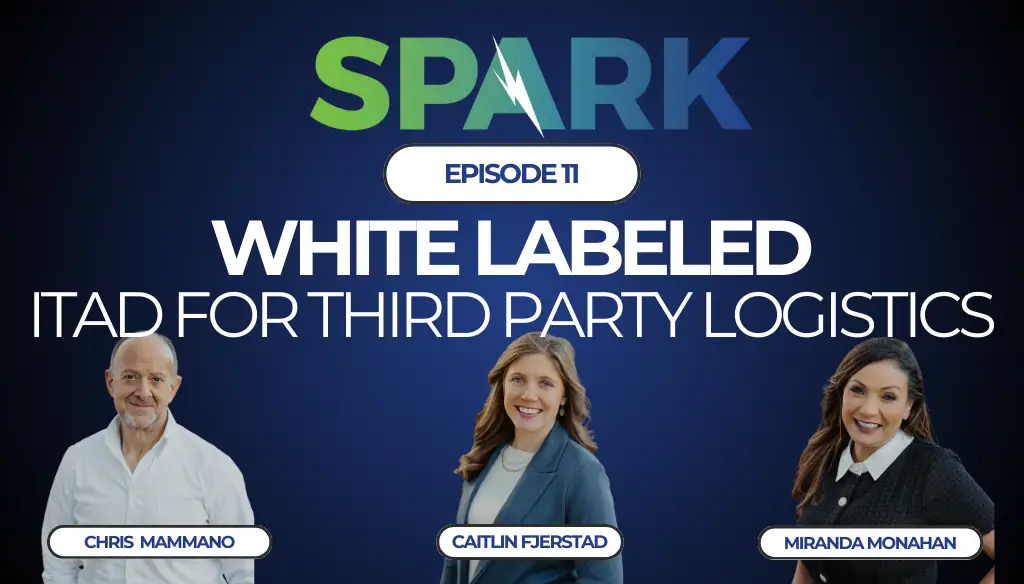
In this episode of the Dynamic SPARK Podcast, host Caitlin Fjerstad sits down with Chris Mammano, VP of ITAD Sales, and Miranda Monahan, Director of Global Technology Partners at Dynamic Lifecycle Innovations, to explore why third-party logistics organizations are increasingly offering white-labeled IT asset disposition (ITAD) services to their customers. From chain of custody and global reach to sustainability reporting and resale value, the conversation breaks down how logistics providers are uniquely positioned to manage secure, responsible end-of-life IT programs.
The discussion covers:
Why logistics providers are a natural fit for ITAD and reverse logistics
How white-labeled ITAD differentiates service offerings without added overhead
The sustainability impact of reuse, responsible recycling, and circular economy models
How Scope 3 carbon avoidance and verified carbon insets support ESG goals
Ways ITAD can create new revenue while simplifying vendor management
Whether you’re a logistics leader looking to differentiate your services or a sustainability-minded organization seeking more responsible end-of-life solutions, this episode offers practical insights on turning ITAD into a value-added extension of logistics operations, without compromising security, compliance, or customer trust.
Featuring Chris Mammano, VP of Sales and Miranda Monahan, Director of Global Partnerships.
View Full Podcast Transcript
Caitlin Fjerstad (00:13)
Hello everyone and welcome to this episode of the Spark podcast hosted by Dynamic Lifecycle Innovations. Today’s episode is meant to be a deep dive into why third party logistics organizations are beginning to offer white labeled IT asset disposition services to their clients. So our goal today is really to help educate on the sustainability benefits, the added value for logistics organizations clients, and also how offering white label ITED
services can help differentiate your organization from other logistics providers. And to top with us today, we have Chris Vamano. Chris, thank you so much for joining us today.
Chris Mammano (00:52)
Thank you so much for having me. Appreciate it.
Caitlin Fjerstad (00:54)
Wonderful.
Well, Chris is the VP of ITAD sales and has some experience in the space as well as Miranda Monahan. And Miranda is our director of global technology partners. Hello, Miranda. Thanks for coming on today.
Miranda Monahan (01:05)
Hi, Caitlin,
I’m so happy to be here with you.
Caitlin Fjerstad (01:08)
Yay. Well, I’m excited to dive right in. And as this really is educational for everybody, and I always love doing these podcasts because I learn from each and every one of them, which is great. But to start out for this one, can you explain a little bit more about how it came about that logistics providers were interested in and even some have started offering white labeled ITED services to their clients?
Miranda Monahan (01:33)
Yeah, so I’ll take that one. ⁓ We were at a trade show and we had a gentleman who was a sustainability officer at a logistics company and he came to our booth and asked us if we could give him more information about IT asset disposition because he had a customer in Australia who was asking for these services and he kind of didn’t even know where to start. So, you know, we took some time, educated him on the space, on certifications, those type of things.
And we were able to provide a solution in Australia for him. So we got to thinking, Chris and I, about, I wonder if they have any other clients that they move electronics for. So we went back to him and said, would you be interested in offering this as a total solution to your clients? And he came back and told us that they actually work with one of the largest manufacturers in the world.
and that they supported them globally from a logistics standpoint. So we got together with them and put together a total global solution for this client. And the client was very impressed when their logistics provider, global logistics provider provided them a solution for the end of life services. And so they felt like they had taken a very proactive approach with the client.
Caitlin Fjerstad (02:55)
Yeah.
Miranda Monahan (03:01)
The client was grateful for the services and we were able to turn some of that cost center that they were spending with that logistics provider into resale back into the customer.
Caitlin Fjerstad (03:12)
wonderful. It’s always a bonus, but you can change that around and look at the other way. that’s great. And I guess off of that too, so great example of just walking through and how somebody was able to provide this as a logistics for their client. Why do you think labeling, white labeling IT services is becoming a newer topic of discussion and development or interests for logistics companies in general?
Miranda Monahan (03:13)
Yeah. Yes. Yeah.
Chris Mammano (03:39)
So I’ll take that one, Caitlin. I think when you’re in a competitive services industry, you’re looking for a couple of things to go to market with. One, quality of the service that you’re providing to your customers and differentiation from your competitors, right? This is a space that naturally fits because they are already handling housing, storing and charging the customer typically for those storage of equipment. So they’re in the right seat to be able to do this.
And again, it offers a differentiation for them. think companies today, large companies in particular, are looking to consolidate vendors. I think in the case of a logistics provider now enhancing the service offerings that they’re providing, maybe it eliminates another vendor relationship that that customer has to manage and vet and continue to stay on top of. So it meets that initiative as well. It provides the necessary service. It helps them consolidate vendors. It helps the logistics provider.
Caitlin Fjerstad (04:28)
Yeah.
Chris Mammano (04:38)
look like a visionary and a trusted partner because you’re bringing ideas to the customer. And like we’ve said before, ⁓ there’s value that can come back from this, right? So that’s a unique position for them to be sitting in. I honestly see no downside to it. So I think it’s become an aha moment.
Caitlin Fjerstad (04:57)
Absolutely. Yeah. And to your point, what’s the downside of potentially offering it? And also I think so many people, there’s so many different services that are provided by so many different vendors. So when you can consolidate that and take advantage of only having to continue to manage one relationship and manage one vendor, that’s a huge benefit. And just also the time that it goes into managing that. So you get that time back and can be sent to another area. So no, that’s fantastic. Thank you for walking through that.
Why do you think that logistics providers or logistics organizations in general are uniquely positioned to be able to offer white-label ITAD services? Why logistics providers out of all the rest?
Miranda Monahan (05:39)
Yeah, I’ll go ahead and take that one. I think that first of all, ITAD lives and dies by chain of custody. Where is the equipment being picked up and where is it being designated to? And logistics provider is already doing that for their customers, right? So they’ve already earned that trust with their customers and the customer feels good about their chain of custody and their movement of their electronics. So that’s huge positioning right there.
Caitlin Fjerstad (05:46)
Yeah.
Miranda Monahan (06:08)
⁓ the other thing is it’s a, it’s a huge cost to clients. they have already paid that money to the logistics provider. So, so just working within the confines of that chain of custody that’s already there, ⁓ is, is huge to them. So that’s unique positioning right there. Plus their geographic reach, you know.
Caitlin Fjerstad (06:28)
Yes.
Miranda Monahan (06:29)
whether they
are domestic or global, they have boots on the ground, they’re in the customer’s facilities, their data centers, everywhere already. Why not take that opportunity and help direct where that equipment meets its final disposition? It’s just, and then white labeling, why not add revenue without the cost of the overhead of building an ITAD yourself? You can just outsource it to another,
Caitlin Fjerstad (06:46)
This way.
Yeah.
Miranda Monahan (06:59)
to ⁓ a responsible ITAD provider. And then it’s a natural fit from a white label standpoint, It’s one invoice and it’s one partner to hold accountable.
Caitlin Fjerstad (07:12)
Yep. Yeah, absolutely. Thanks for that. Yeah. Thinking about logistics, you’re right. The global reach, they already have that. So that’s fantastic. But chain of custody, anybody thinking about their IT equipment, it is so important to your point and it’s just provide that additional trust. And everybody wants to have trust when they’re talking about all of the data that they have on their IT equipment. So yeah, that makes complete sense. Yeah.
Miranda Monahan (07:25)
⁓
Absolutely. Yeah.
Caitlin Fjerstad (07:39)
So now switching gears a little bit on the sustainability side, because sometimes obviously logistics, that is an area that sometimes adds to your carbon ⁓ footprint, maybe not always in the best way. And so what are the really sustainability aspects that logistics companies can lean on to help reduce or offset some of those emissions by providing ITAD services?
Chris Mammano (08:03)
So if I could frame it from a high level, sustainability and ESG has clearly become a discussion in boardroom meetings, in leadership discussions, because people who care about the image of their organization to the outside world and attracting business as a result of a positive image, they want to be seen as an organization that does the right thing, right? I think we can all agree that.
proper responsible recycling and reuse more so than anything else is doing the right thing from an environmental perspective and from a value perspective.
I think anything that promotes a circular economy is a benefit to the organization that is doing that activity. So if a logistics company is seen in providing this space and providing realistic reuse scenarios for their customers, again, doing all the things we talked about before consolidating the vendor management piece of this thing, it’s going to elevate the brand, right? I think it’s going to have them looked upon as a different kind of provider.
somebody who’s bringing some other benefits to the organization. So I don’t think there’s a single benefit to this thing. I think there are multiple ones that come through. There’s two paths. The equipment can go, obviously, right? It can be responsibly recycled. But if you can reuse that device, think about it.
Not only did we not have to throw that away in one shape or form, even in a raw materials format, right? It also takes away the need to build a new device that day, right? So we don’t have to create new plastic. We don’t have to mine more, more minerals from the earth to build this. We don’t have to have additional carbon impacts from the transportation of that new device back and forth. So there’s multiple benefits that continue downstream and in the logistics industry in particular.
And they’re certainly not the only one. Transportation in general, a lot of fossil fuels get burned, right? The business that they do on behalf of their customers creates a carbon footprint, right? If they are in a position now to be able to say, hey, this necessary services that we’re providing to the ones we have been providing and this new service, these all create carbon impacts, but this new service actually gives you a benefit. gives you an offset, if you will, by
Caitlin Fjerstad (10:03)
Thank you.
Chris Mammano (10:26)
providing reporting on scope three carbon emissions avoidance. Now, in addition to being a more viable vendor, if you will, the logistics provider can do a couple of different things here to benefit. They can purchase what’s called carbon insets.
Caitlin Fjerstad (10:31)
Yeah.
Chris Mammano (10:43)
So we’re actually the first in the industry to offer verified third-party carbon insets that companies can purchase. That is really the reporting on responsible recycling that took place already, but from organizations that did not want the reporting or municipalities, I could not utilize it the same way. So these insets can be purchased. The logistics company can say, look, in our natural doing business, we create this carbon footprint.
But here’s what we’re doing to offset it. And it gives them a better outlook overall, again, elevates their image. I think the bigger benefits go to the customer, but then they get the benefit, they, the logistics provider get the benefit of happy customers, retaining customers, attracting customers as a result of offering that benefit.
Caitlin Fjerstad (11:28)
Mm-hmm. That’s helpful. And explaining it to the fact that, one, the logistics provider can have those benefits of sustainability benefits, the reporting, the insights option as well that you described. And that’s newer, just people talking about insights and how that differs from other sustainability benefits. So it’s a great as well. But not only can the logistics provider benefit from that, but they can pass it along to their clients.
Miranda Monahan (11:34)
you
Caitlin Fjerstad (11:54)
again, leveraging and increasing their brand, their reputation, as mentioned with their clients and potential clients into the future as well that they’re offering it and maybe not all others are. So that’s great to know it can kind of be passed along to their clients as well. That’s fantastic. Thank you.
Chris Mammano (12:09)
Yeah, for sure. I did want to differentiate one thing though. If a logistics company purchases an inset, they can either use it for their own benefit or provide it to their customer for the customer to use that. The customer is still going to get the benefit of the equipment we process on their behalf, but that inset that got purchased is a one use, right? Either the organization, the logistics provider, or they could, we’ve spoken to some OEMs who in trade-in programs have said, hey,
Caitlin Fjerstad (12:22)
Okay.
Mm-hmm.
Chris Mammano (12:38)
we could give these insets to our customers, it’s a further incentive for them to do business with us, right? So there’s possibility to resell those, if you will. You just can’t use it and then sell.
Caitlin Fjerstad (12:44)
Okay.
Yeah, makes sense. Can’t double dip in it. Perfect. Well, thanks for chatting a little bit about just the sustainability aspect. As you mentioned, too, it’s just such a huge topic of discussion and really important to so many companies, their brand and the people who are utilizing their brand as well. So appreciate that. Outside of sustainability, are there other opportunities that logistics providers are capitalizing on as they break into this space of offering iPad services?
Chris Mammano (12:53)
Yeah.
Thank
Miranda Monahan (13:20)
You know, Caitlin, that is a very insightful question. Why are the logistics companies entering into this space? And I’ll tell you, like, number one reason, revenue. So in logistics, we all know there’s very thin margins from a logistics standpoint when you’re accounting for that revenue from logistics. And there are ways to make money as far as services are concerned. have, you know, a suite of services we provide, which they can mark up.
and pass those along to their customers. There’s also the resale. So they’re putting money back into their customers’ pockets, but they’re also creating recurring revenue now, right? They’re also becoming the prime vendor for their customers from a reverse logistics standpoint. they’re doing already, they’re doing the deployment, the movement, the warehousing.
And then they’re recovering the equipment when it’s close to its end of life. It makes sense for them to just do the disposition as well. ⁓ And then they’re able to do that white labeling somebody else’s services so they don’t have any of the overhead there either. They’re also providing a data security, like ⁓ risk adverse solution to their clients. And their clients appreciate that. Again,
We talked a little bit about, you know, they just want to manage one vendor and they already trust this vendor. It makes sense for the logistics company to find a trusted iPod provider and pass that along to their clients. So ⁓ it’s just one of those things that they are just poised really well. And those reasons are revenue control and relevance in their customer site.
Caitlin Fjerstad (15:09)
Yeah. Yeah. Revenue is obviously a key thing for every company. yes. And I like how you’re referencing it too. It’s they’re able to offer these services and through white labeling them, they don’t have to be the expert. They don’t have to take on that overhead. They partner with somebody who is an expert in that space and still provide that trusted service for their clients. I just really appreciate how you, how you’re referencing all that together with the new answer. So that hit home for me. Now,
Miranda Monahan (15:12)
Everybody is about revenue.
Thank you, Caitlin.
Chris Mammano (15:38)
Caitlin,
I want to double down too on the brand uplift, right? Because this is, as a sustainable service being offered out there, it really is something that differentiates them in the right?
Caitlin Fjerstad (15:49)
It’s that benefit that’s not always a line item on paper, but it’s that feeling that you have when you’re making a positive impact around you, but also for the people that you’re serving. yeah. OK, we have covered a lot so far. And I know there’s probably still so much that we could learn about this topic. But to kind of wrap this up, if I am somebody within the logistics industry who is contemplating adding white-labeled ITED services to our organization,
What advice would you give me? I know you both have a lot of experience working with companies and guiding them within multiple different industries. So again, what advice would you give me? And are there any risks if I don’t decide to move forward with this type of an offering? I’m not sure if there are any risks, but if there are, if you could shed some light on that as
Chris Mammano (16:38)
Sure, Miranda, I’ll start if that’s okay. Look, I think the way you start and the advice that we would give is you bring this up as a topic, right? You ask your customers how they’re handling that today if they aren’t already telling you where to send stuff at the end of life, which in some cases you are. In that case, be proactive and come to them with a plan. But at a minimum, have the discussion because if you don’t have the discussion, there’s a very good chance that one of your competitors will.
Reverse logistics trade show that we were at pretty much every booth from a logistics provider had some type of messaging around reuse or at least recycling, right? It’s not too late by any stretch. think most companies are just starting down that
Caitlin Fjerstad (17:17)
wow.
Yeah.
Chris Mammano (17:24)
But your competitors are doing this, right? And will be doing this. So, so get in front of it. Be the one to bring it up. The rewards that we’ve talked about throughout for your customers, for yourself, for retention and attracting of new accounts is there. On the risk side, I would say honestly, and not to be contrite, but the risk is not doing anything. Somebody is handling the end of life electronics ⁓ path, if you will, for these customers. If that somebody is not you.
and you have a competitor and you all have competitors that are out there knocking on the door of your customer, that competitor is going to come to the table with a broader set of capabilities if you’re not offering the space, right? Miranda touched on this before. I think it is very unlikely that these providers in the logistics space are going to develop ITAD and recycling capabilities from a certified level, right? So the other risk associated with it is make sure your partner is a vetted partner who has the right certi-
who can do the work appropriately, who can bring the most value back, and who’s going to show up well to your customers. Because they’re representing you, their service is representing you, and you can’t risk that by having a poorly qualified
Caitlin Fjerstad (18:27)
Mm-hmm.
Miranda Monahan (18:38)
And I would just add to that too, like a logistics company needs to remember that they are uniquely poised to do this. And it’s just another benefit you can give to your clients. So I would double down with what Chris said and ask the question.
Who’s doing your end of life? IT asset disposition.
Caitlin Fjerstad (18:59)
Wonderful. Well, thank you so much. I also ending on a question that is a little bit of giving advice to our listeners so they can help just better their programs and what they’re focusing on and just really appreciate the insights around sustainability around offering more value to our logistics companies clients and just overall how they can help.
best differentiate themselves from their competitors. Because all of us essentially want to continue to being the best that we can be and providing those services to our clients as best we can. So really appreciate all of those insights. Miranda, Chris, thank you so much for joining us today. was pleasure having you on here. Yeah. And yes, of course, come back again. But for everybody, thank you for tuning in today. If you have any questions for Chris and Miranda,
Miranda Monahan (19:34)
Thank you for having us.
Chris Mammano (19:34)
Thank you.
Really appreciate it.
Caitlin Fjerstad (19:44)
Their information will be in our bio and they would love having a conversation with you, speaking for them, but they would love having a conversation with you about logistics, providers, and how you can best offer IT services and get into that space. So thank you all again. Have a great day.
Meet The Speakers
Chris Mammano is the VP of ITAD Sales at Dynamic. Connect with him on LInkedIn.
Miranda Monahan is the Director of Global Partnerships at Dynamic. Connect with her on LinkedIn.
Caitlin Fjersted is the Sales Operations Manager at Dynamic.
Related Resources