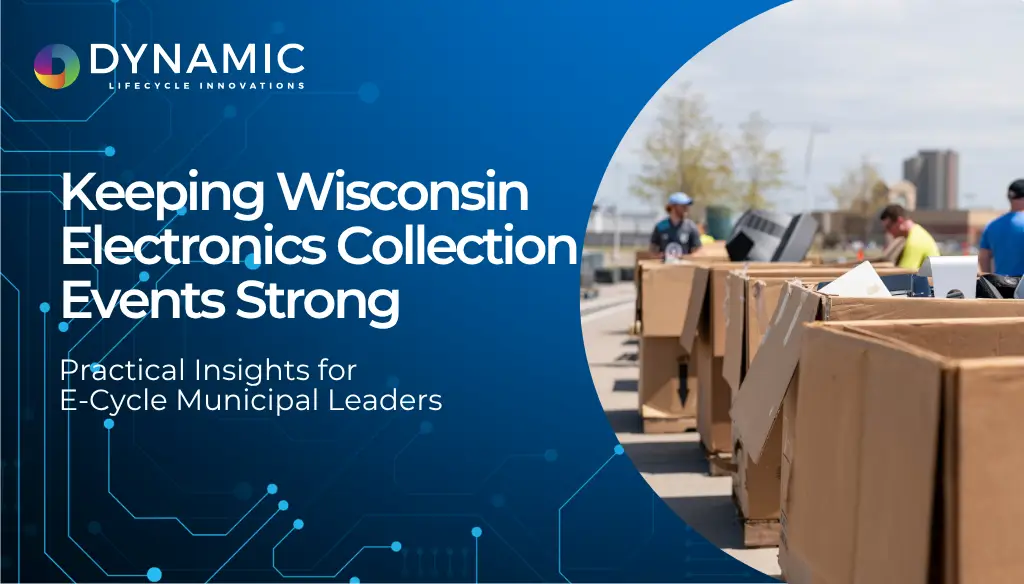
Keeping Wisconsin Electronics Collection Events Strong
Practical Insights for E-Cycle Municipal Leaders
If you’re responsible for e-waste in your county, city, village, or town, this work isn’t new to you.
Wisconsin residents recycled nearly 19 million pounds of electronics in 2024 through the state’s E-Cycle program; landfill bans remain in place, and annual E-Cycle reporting requirements continue to shape how programs operate.
Across the state, many municipalities have been hosting electronics collection events for years. The focus today isn’t whether events work — it’s how to keep them efficient, aligned, and valuable for residents year after year.
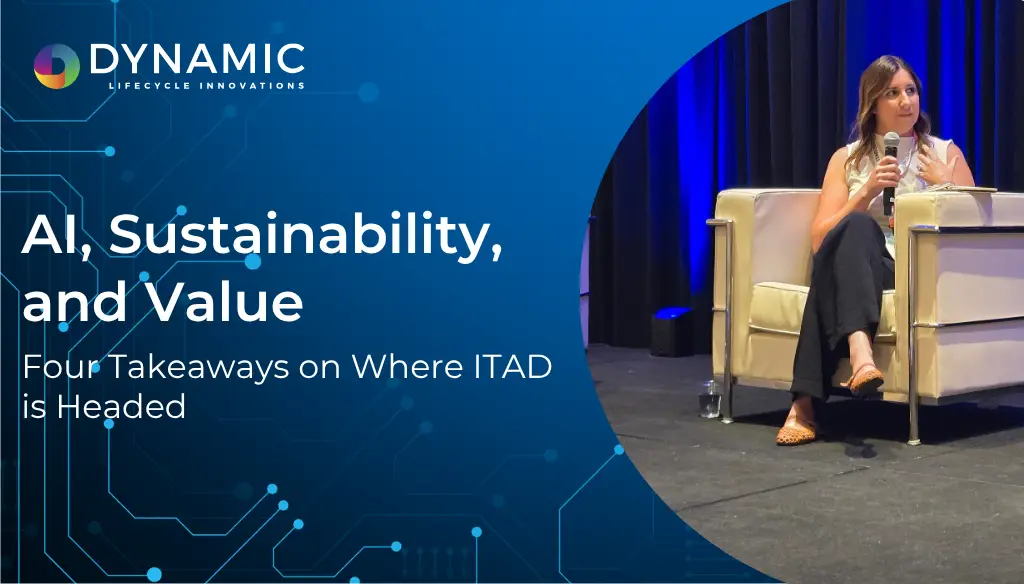
During a recent panel discussion at the Wisconsin Integrated Resource Management Conference, Amanda Haffele (Portage County) and Valerie Parker (Village of Weston) shared what they’ve refined over time. Their experience reinforces a simple truth:
Well-run events are intentional.
If you host an event, residents will come — the key is being ready for them.”
Amanda Haffele – Portage County
Consistency Strengthens Participation
Wisconsin Electronics Recycling Event Planning
In Weston, planning begins in winter for a spring and fall Saturday event — typically held on Saturdays from noon to 5:00pm. That consistency has created expectation.
When residents know an event is coming once every spring and fall, awareness remains steady. Even in communities with long-standing programs, predictable scheduling reinforces participation.
In Portage County, collection events also complement a permanent site. Many residents first learn about the year-round option after attending a collection event.
Collection events don’t just divert material — they increase visibility and reinforce responsible disposal habits.
Logistics Define the Experience
Improving Flow at Municipal Collection Events
From traffic control to signage, logistics shape how residents feel about the event.
Key factors include:
- Clear entry and exit routes
- Coordination with police and highway departments
- Planned overflow space
- Adequate staffing
- Organized load staging
Portage County implemented scheduled time slots to manage flow. The result: residents are typically in and out in minutes.
Even established programs benefit from reviewing logistics annually. Construction patterns shift. Traffic patterns change. Staffing evolves.
A smooth event builds public confidence.
Structuring Cost Around Capacity
Free vs. Low-Cost Electronics Collection Models
Wisconsin communities use a range of pricing approaches.
Some host free events. Others use modest per-vehicle pricing.
Both panelists emphasized aligning cost structure with operational capacity. Modest per-vehicle pricing can:
- Create predictable volume
- Support manageable flow
- Offset operational strain
- Remain accessible for residents
There is no universal model — only what fits your site, staffing, and community goals.
Thoughtful structure supports long-term sustainability.
Consistency and logistics make the difference. When residents know it’s coming — and the event runs smoothly — participation follows.
Valerie Parker – Village of Weston
Outreach Requires Intention
Increasing Participation in E-Cycle Wisconsin Events
Even long-running programs benefit from consistent promotion.
Strategies that continue to work include:
- Promotion beginning 4–6 weeks in advance
- Municipal website and Facebook updates
- Cross-promotion from neighboring communities or from a recycling partner
- Local print publications
- Clear communication about accepted and non-accepted materials
Clarity reduces confusion — particularly around high-volume items like TVs and batteries.
Residents also increasingly ask about data security. Being able to explain secure handling and certified downstream recycling builds trust, and that trust supports long-term participation.
E-Cycle Alignment Is Foundational
Supporting Wisconsin DNR Reporting & Compliance
Under Wisconsin’s E-Cycle framework, municipalities operate within a defined compliance structure.
Accurate material tracking and clear documentation help:
- Simplify annual reporting
- Reduce administrative burden
- Align with DNR expectations
- Protect community credibility
Both panelists emphasized the importance of working with a recycling partner who understands:
- Covered vs. non-covered devices
- Wisconsin reporting categories
- Proper load documentation
- Clear, easy-to-read shipment reporting
When reporting is organized and reconciled early, year-end processes become significantly smoother.
Operational reliability allows municipal staff to focus on service — not paperwork.
Defining Success in Wisconsin Collection Events
When asked what defines a successful event, the responses were practical:
- Smooth traffic flow
- Short wait times
- Positive resident feedback
- Accurate reporting
- Strong rural participation
Pounds diverted from landfill remain important. So does the resident experience.
In many Wisconsin communities, well-run events reinforce confidence in local leadership and environmental stewardship.
Planning for 2026?
Electronics collection events are now a fixture across the state.
For communities reviewing their structure heading into 2026, early planning creates flexibility — whether refining logistics, evaluating pricing models, or strengthening E-Cycle alignment.
Working with an experienced, certified recycling partner who can provide a coordinated, turnkey approach — including logistics planning, secure handling, documentation, and reporting support — can simplify the process and reduce strain on municipal staff.
Wisconsin communities have shown that with thoughtful planning and strong operational alignment, electronics collection events remain an effective, compliant, and resident-focused solution.
To request a collection event proposal, email us.

Related Resources