The Partnership Pillars | Dynamic X FedEx Podcast
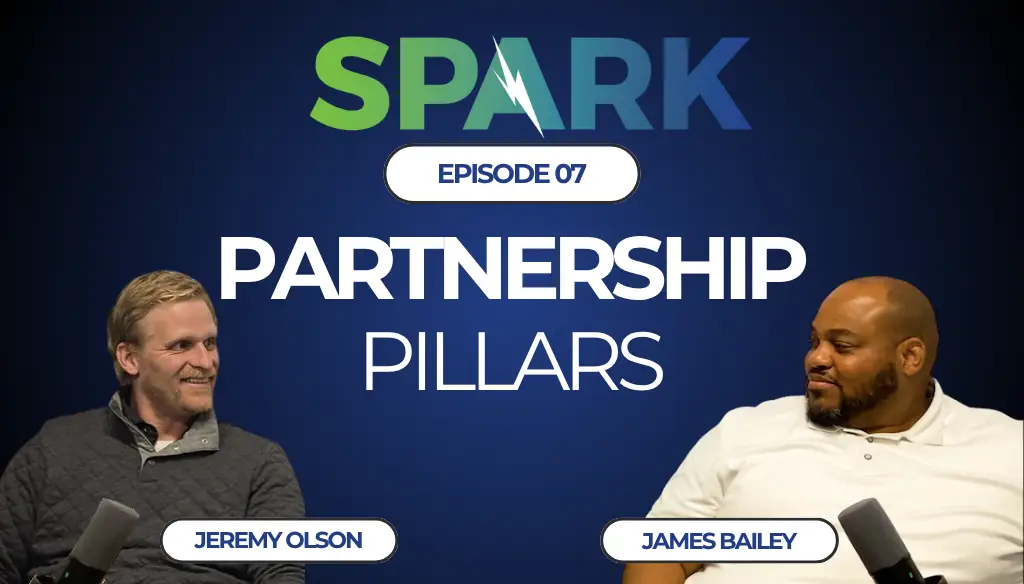
In this episode of The Spark Podcast, FedEx IT Asset Manager James Bailey and Dynamic’s Jeremy Olson share how transparency, communication, and adaptability built a lasting ITAD partnership. They discuss FedEx’s search for a new IT asset disposition partner, lessons learned from the RFP process, and how culture fit drives long-term success. Discover how clear communication and flexibility helped turn complex logistics into seamless collaboration. Hear real-world insights on sustainable IT lifecycle management and what it takes to create vendor relationships that truly perform.
From navigating a six-month IT asset backlog to building a culture of mutual trust, James and Jeremy share an authentic, inside look at how FedEx and Dynamic worked in lockstep to create a relationship that goes beyond transactions.
They discuss:
How FedEx approached finding the right ITAD partner through a transparent RFP process
Why culture fit matters as much as technical capability
The importance of open communication during onboarding and beyond
How adaptability drives long-term collaboration and growth
Whether you’re an enterprise IT leader or an ITAD provider, this conversation offers practical lessons on how transparency and alignment can turn challenges into opportunities—and partnerships into lasting success.
Featuring Jeremy Olson, Senior ITAD Solutions Executive from Dynamic and James Bailey, IT Asset Manager from FedEx.
View Full Podcast Transcript
Welcome to the Spark podcast hosted by Dynamic Life Cycle Innovations where cutting edge solutions meet effortless experience and maximum returns. Today we are joined by James Bailey and Jeremy Olsen. Now let’s get started.
Caitlin Fjerstad: Welcome everybody to this session of the Spark podcasted by Dynamic Life Cycle Innovations. Today we’re excited to have a couple people join us. First of all is James Bailey, IT asset manager from FedEx with multiple years with experience within the field. We also have Jeremy Olsen from Dynamic. He is a senior corporate solutions executive with almost 15 years of experience within the industry. So, welcome to both of you and thank you so much for joining us today.
Thank you for having us. It’s great to be here. Thanks for making the trip.
Caitlin Fjerstad: What we’re going to be doing today is really exploring the pillars that lead to a successful partnership from both the client’s point of view, but also an ITAD vendor’s point of view as well. So, let’s go ahead and get started. And first question, James, is going to be more from your point of view as the client. So, when FedEx started seeking a new ITAD partner a few years back, what challenges or pain points were you looking to solve?
James Bailey: Uh, so for us, we’d been in a long-term relationship uh with our prior vendor. Uh, and things had started to change relationship wise. Uh, so for us, we went out for RFP. We had about 6 months uh of IC assets that we’ve been storing on site. Okay. Uh, we wanted to use that as a test for our new vendor. Yeah. Uh and that was really our our main pain point. So trying to find a really great long-term partner uh to build and establish a great relationship with uh as well as managing uh through that backlog.
Caitlin Fjrstad: And then you know it seems like going through RFP process probably you from the client point of view and also experiencing that from the vendor side. Jeremy for you transparency seems to be really important going through that process. So, if you guys could each explain maybe from each of your seats too why that’s so important. Um, but also how it has helped really set the stage for better outcomes post RFP process.
Jeremy Olson: Yeah, absolutely. I I can go first. Um, you know, and I’ll use the corporate buzzword lockep. I think transparency upfront in the RFP and I think FedEx did a really great job of painting the best picture of what uh the ITAD vendors that were participating were going to be experiencing if they were selected. You know, we’ve got they published the pounds of uh recycled material by device type. They did all their process expectations. They listed an implementation plan that was what their expectation was. So it really like you know set the bar for transparency for the RFPs I participated in to be completely honest. It gave all it gave dynamic as an organization the internal awareness of yes we want to get get aggressive on this. We want to I mean our end goal is to be the vendor but we knew exactly what we were getting ourselves into when we were putting together our proposal which I think is is really helpful. And then you know you know having the pleasure of being onboarded as a vendor and being selected. I mean, we were in lock step from from day one. Like, we knew what all parties were going to be doing. So, it it made it very very efficient when it came to onboarding.
Caitlin Fjerstad: Fantastic.
James Bailey: I think lock step is actually a perfect word, right? Um, as we went out to RFP, I think originally we had about 75 vendors to actually respond. Uh, we narrowed that list to a top 10. Okay. Uh, and then at that point, we decided that we wanted to go to each site, right? So, obviously, uh, vendors reply to questions. Mh. Uh, it’s one thing to read the responses. It’s another thing to actually go on site and actually see um those words in action. Uh, one of the big things that we walked away with from Dynamic was culture, right? The culture of your organization fit perfectly with the culture of FedEx. So, that transparent piece became very obvious early on about what we can and can’t do. Um, and it gave room for negotiation and partnerships and relationships. So, all of those things were critical for us as we were going through the the first part of the process.
Caitlin Fjerstad: Yeah. And as you mentioned with going on site too because I know we talked to organizations from time to time and we mentioned and we recommend that like that’s such a valuable piece. So was that really insightful for you guys throughout it just when you’re comparing the different organizations together then?
James Bailey: So for us you know it’s probably a gross analogy but I look in terms of if you’re buying a home or if you’re buying a car right you want to go through and you want to be thorough in terms of going through that process right you want to test drive the car. Yeah. uh you want to drive through the neighborhood different times of the day. Are there kids out? What’s happening in the neighborhood? Right? No different than building a corporate partnership, right? You want to understand what are what’s the organization like? How are the people? How do they treat their people? Uh all of those things are important, right? And I think for us, uh we call it pulling back the covers, right? When you pull back the covers, right? The words that were on the RFP meant what we saw in person, right? So it wasn’t an opportunity for there to be this ambiguity. uh it was very clear that everything that was written was being demonstrated in the office. So that that was a big win and a huge comfort level uh for us, right? Having been with our previous partner for more than 10 years making a a sudden shift, right? You definitely want a comfort level and then I just taken that role probably 6 months prior too. So it’s like, hey, new role, new vendor, you know, you definitely want some comfort there. So seeing it was worth it’s it’s almost like a picture’s worth a thousand words. It it literally meant that that to us to be able to do that.
Caitlin Fjerstad: Fantastic. Well, I’m glad that you were able to take that opportunity to go visit all the vendor sites and that it was so helpful for you, too. That’s awesome.
Jeremy Olson: I think that visit too, what I’ll add, I mean, it just kind of set the playing field for the communication standpoint, which I think we’re going to touch on in a little bit, but you know, the word that I heard James and the team use over and over again from the moment we submitted our RFP to the when they came on site was partnership. And you even mentioned it just now. And I think like when you talk about our culture, we talk about your culture. It’s like we knew that this was going to be a family dynamic just with everybody’s vision for the relationship was going. So, I think that really helped us know where our commitment level needed to be at and that’s a level that we’re used to being at as long as you know it’s reciprocal.
Caitlin Fjerstad: Yep. Great. Thank you guys. Well, and you kind of mentioned obviously hit on communication quite a bit there. So once you move from that RFP stage and award um and going into that onboarding process which can vary it can take a short amount of time if it’s rush and it’s there’s a need in place absolutely but it can also take a year sometimes just really depending on the organization and the vendor. So for you guys when you look at that onboarding process what role does reoccurring communication play or those shared milestones and hitting your targets? How does communication play into those?
James Bailey: Uh so for me it really takes the guesswork out of the process, right? Um the thing that was really important for us during our migration was the fact that everyone was always seemed to be on the same page. So we knew that we had a huge backlog that we needed to work through. We knew we had some deadlines in terms of when we needed to be out of the other facility uh that we were leasing. Uh so everything was up front. So it kind of set the stage again for the relationship, right? Uh it also gave us an opportunity to test the systems, right? And I think that was a big thing for us going into the new partnership, being able to say, “Hey, here’s how we work. Here’s how we work. Oh, by the way, let’s figure out how do we work together, right?” So, having an opportunity to really exercise the process on the beginning and then having the opportunity to constantly tweak it almost forced the communication to some degree. Um, and it made the partnership, I think, blossom that much quicker. Yeah, absolutely. Absolutely.
Jeremy Olson: And I think like to James’ analogy of like test drive the car, like this was the the first stage of understanding the horsepower of what Dynamic could do. You know, like we’re talking a thousand pallet backlog that’s ready right now. And their preference is get it out in the next couple days. You know, our preference is like, you know, we obviously have to manage other inbound material, but you know, setting that deadline and communicating around it. I think I mean, you ask, you know, what role it plays. I think communication, I mean, personal life, professional life, it plays the biggest role.
Jeremy Olson: Absolutely. You know, and I think when we still have meetings, like we set up bi-weekly meetings to the start, we still have them today. And I think it’s extremely helpful for either connecting the dots, making sure people are on the same page, interpreting different reporting and or making fixes that we need to make, you know, and to allow FedEx to maybe implement that reporting back into their software or, you know, be able to read that internally the way they need to. The other thing is I think it takes the guesswork out of the relationship, right?
James Bailey: It’s it’s like a marriage, right? It’s you know what the other person’s thinking. So even when things are difficult, the conversations are easy, right? It’s hey, we’re negotiating something and he knows that he’s fully negotiating for dynamic and I know I’m fully negotiating for FedEx and we find the middle ground. It’s so much easier to find that because of the relationship that we’ve established. Yeah. And I would say even in negotiations which we have recently, it’s like you know where I’m coming from. I know where you’re like we say it all out loud like you know it’s what’s our favorite term in the spirit of transparency. We probably say that to each other. We do. Five dozen times a week, right? So, Exactly. Yeah. That’s fantastic. Well, thank you for talking through that. And like you said too, it’s communication is so important in every aspect of life.
Jeremy Olson: But yeah, it makes those if there are any challenging conversations, but just of like, hey, there’s a stuck, right? There’s a stuck in everybody’s life at some point, whether it’s somebody that you work with every single day or uh once a year, whatever it might be. And it just makes it so much easier to go through those stucks and work through those stucks and get to that successful part for everybody kind of a thing. win-win situation.
Jeremy Olson: And I think you I mean that’s a great point. I think the vulnerability levels at this point are just so high. Like true. There’s no stakeholders in our weekly meetings that haven’t met one another. Sure. You know, and they’re talking regularly. So everybody again is in lock step with what’s going on on that side of the fence on our side of the fence and it just makes for an efficient relationship.
Caitlin Fjerstad: Yeah. Wonderful. And I would say too so most likely along with that communication being really strong I’m sure adaptability too as you guys mentioned if things change and James as you mentioned you had a vendor for 10 plus years so change is sometimes like oh we were so used to our certain routines and so the change so how does really adaptability play into having a continued successful partnership and moving forward.
James Bailey: So for us it’s really critical right um you really don’t understand what another person’s going through until you’re having that conversation right so when you think about the fact that we’re a small cog in the wheel from a customer perspective and that you also have other customers to service understanding what how things eb and flow in your business um what other needs you need to meet right those things become critical
Jeremy Olson:I think adaptability I mean I I’ll speak from the vendor perspective I mean we need to give them confidence that as their business changes, which FedEx is probably one of the largest ships of corporation sizes out there, as they change and, you know, things shift within their organization, they need to have the confidence that we’re going to come alongside of them and be ready for anything. And again, I go back to that backlog like that’s proof right there right out of the gate. Um, but I mean, we’ve had a lot of different uh project needs. you know, right now we’re talking about, you know, doing some data center work together and I mean it, you know, we talk about a plan day one, 10, 5 days later that plan might change, you know, for various reasons, vendor or on their side. So, you know, I think it’s really important to be open to adapting and the moment you start to put your clients in a box is the moment you basically choke off the ability to adapt. And you know, that’s one thing that as a corporation, I think with Dynamic and being here for the time that I have, we’ve never wanted to put clients in a box. It’s like you here’s here’s the box. You shape and form it the way you need to to meet your needs, and we’ll operate it within it. Um, but, you know, we can bend corners and do, you know, we can modify it how we need to to meet your your business needs as they change.
Caitlin Fjerstad: Fantastic.
James Bailey: I I think for us, right, when when dynamic comes to mind, I think of water, right? Whatever you put water in, it takes the shape of that container. Yeah. Right. And when you think about the projects, the relationship, uh, all the challenges that we’ve had and overcome throughout the course of of establishing the relationship, that’s the thing that comes to mind. So, I think when I think adaptability, I think water, and I think of your culture, and again, how great uh of a partnership we we form together. I appreciate that. It’s a good analogy.
Caitlin Fjerstad: Wonderful. All right. Well, kind of thinking about what we talked about today is, you know, hearing a lot about one transparency, about communication, adaptability or flexibility, but it also sounds like continuous improvement too of just being able to adapt and move forward in such a positive way. Um, how do you guys feel like looking at some of those key pillars for keeping a stronger relationship play into the ability to support new projects moving forward? How does that impact the ability to expand of what that partnership looks like?
James Bailey: So I think uh as a part of a partnership you have to be open and willing to to take on new opportunities and risk. Uh and I think dynamic has proven time and time again uh that as FedEx has ebbed and flowed into from the different op codes FedEx ground, FedEx freight, FedEx Express to one FedEx um the responsiveness uh of dynamic has been outstanding. Right? I think when you think of those pillars and you put them together um that’s where success happens and the businesses grow together. I think when you look at some of the expansion that you all are are undertaking, uh there are some areas that we’re centrally located near, uh it just creates some natural synergies uh for both parties to take advantage of of some great opportunities.
Jeremy Olson: Absolutely. I’ll share quickly. I think you know with having transport uh transparency and communication early on, I mean they they birth adaptability. So the fact that we had those right away, it allows for adaptability in really most of the situations we’ve encountered together throughout the last what did we say 3 years now? Yeah. Yeah. Time has flown. So yeah, I mean I think you can’t be adaptive unless you have the other cogs working together in unison. Yeah. Wonderful. Yeah. Well, that kind of ends most of the questions that I have. Anything else that you guys want to share before we wrap up then? Sure. Um I mean I’ll just end with you know just showing your appreciation for the partnership. I think, you know, I’ve grown personally a lot in working with you and and Charles and Ken and Owen, and I know that a lot of the team that’s kind of hands-on in the front line and working with FedEx has has learned and grown a lot from you guys. And, you know, we just look forward to uh continuing the partnership. And I think, you know, hopefully other clients and our vendors out here can learn from, you know, what we’ve kind of established as the principles of a good relationship.
Jeremy Olson: Like honestly, what we implemented to on board and sustain the relationship with FedEx, we’re implementing with our other clients because it works that well. So, you know, I think that there’s a lot to a lot to be said about some of those core principles and the start of a relationship where you can’t look to the future unless you have the foundation, right?
James Bailey: We echo those sentiments, right? I mean, when you think about everyone that we’ve interacted and engaged with um with Dynamic, the Andrews and Jason’s, the Ashley’s, the Casey’s, right? We’ve never had a bad experience, right? You know, one of FedEx’s mantras is to make every experience outstanding. Uh you guys have truly meant that to us, right? To again go from being thrust into a new role to having to get a new vendor and managing through some of those growing pains, it has been a breath of fresh air. I mean, we’ve gone from uh not knowing each other to a partnership to feeling like family, right? I mean we talk about our kids, we talk about uh our families and and we celebrate the good news, we share in the bad news, all those different things, right? So again to your point, right, when you think about again creating a corporate dynamic and a partnership, it is truly a partner and a family and we appreciate it. Yeah, thank you for that. Y wonderful. Well, thank you both for joining us today and kind of walking through that.
Caitlin Fjerstad: It’s great to hear as you guys mentioned too just the the key aspects those pillars that make a really strong partnership back and forth for both the vendor and for the client side of you but not just I mean for IT vendors really for most vendor relationships or client relationships too. So hopefully everybody joining today is able to really take away a lot from this podcast and just move forward with their relationships that they have with their vendors, whether those are current vendors or you’re exploring new vendors or whatever it might be. Can take little bits of this information and make those successful as well. So thank you both again for joining us today. Absolutely. Yeah. Yeah. Hope everybody has a great day and we’ll see you guys next time. Thank you. Thank you.
Meet The Speakers
Jeremy Olson is the Senior ITAD Solutions Executive at Dynamic Lifecycle Innovations. Connect with him on LinkedIn today.
James Bailey is the IT Asset Manager at FedEx.
Related Resources