An Industry of Opportunity
Before entering ITAD herself, Kaela didn’t know the industry existed.
She suspects plenty of people beginning their careers today are in the same position.
Once inside, however, she discovered something very different: an international community filled with people who have built decades-long careers in the industry, along with opportunities spanning far beyond processing retired technology.
Today, those opportunities extend across sales and operations, but also into technology, automation, analytics, strategy, sustainability, data centers and global relationship-building.
“There’s a lot of different things that I think of when I think of ITAD now versus what it was,” Kaela said.
That evolution could be one of ITAD’s greatest advantages when competing for the next generation of talent.
Kaela believes companies need to spend less time simply explaining what ITAD does and more time showing prospective employees what they can do within ITAD. The skills they can develop, experiences they can gain and different directions their careers can take in this growing industry.
New Technology, New Skills, New Possibilities
The work itself is changing, too.
Kaela pointed to AI, robotics and automation as examples of technologies that can make ITAD processes more efficient while creating new opportunities for the people entering the field.
She sees potential careers not just within existing processes, but around controlling robotics, developing strategy, analyzing data and margins, evaluating downstream markets, building international relationships and finding new ways to improve operations.
The next generation will be particularly well-equipped for that environment.
Young professionals are entering the workforce as digital natives, being familiar with technology from a young age. Kaela believes that baseline comfort with technology can be a valuable starting point as ITAD continues evolving into areas such as automation, AI and increasingly complex data center environments.
But ITAD won’t be the only industry competing for those skills.
Technology companies and other major employers want many of the same talented people. For Kaela, that means ITAD companies have an opportunity to differentiate themselves through something beyond the work itself: culture, growth and the ability for employees to make an impact.
Diversifying the Talent Pool
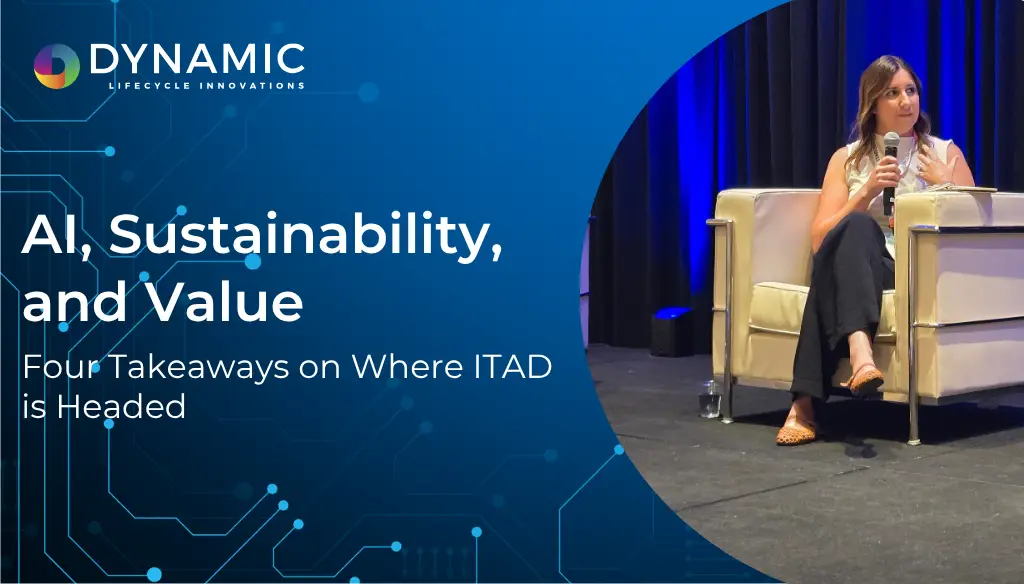
When Kaela Kucera reflected on her recent ITAD Summit panel, there was one topic she wished had gotten more time: women in ITAD.
Earlier that day, Kaela attended the Women in ITAD gathering, where she saw what she described as the event’s largest turnout yet. What stood out wasn’t only the number of women in the room. They represented roles across IT, marketing, sales, operations and other areas of the industry.
For Kaela, Dynamic’s Director of Outbound Sales, it was an encouraging sign of where ITAD is headed.
She sees similar progress within Dynamic, where women hold meaningful leadership roles throughout the organization. To Kaela, creating opportunities is part of building an industry prepared for what comes next.
Building Talent Builds the Industry
As ITAD continues to evolve, so do the expectations placed on the people behind it.
Technology is changing. Data center environments are becoming more sophisticated. Automation and AI are creating new possibilities. And organizations are looking to their ITAD partners to navigate increasingly complex technology lifecycles.
Keeping pace requires people who are curious, adaptable and willing to bring new ideas to the table. It also requires organizations willing to invest in those people and give them opportunities to grow.
That’s part of what made the diversity Kaela saw at ITAD Summit so encouraging. Bringing more women into ITAD is one part of a broader opportunity to welcome new experiences, skills and perspectives into the industry.
At Dynamic, Kaela sees that philosophy reflected not only in who has a seat at the table, but in the opportunities employees have to explore different areas of the organization and build careers around their strengths and interests.
As the next generation brings new capabilities and new ways of thinking into ITAD, the industry has an opportunity to become better equipped for whatever challenges come next.
What Comes Next for ITAD
ITAD has changed dramatically over the past few decades, and there is little reason to believe that pace of change will slow.
If ITAD can introduce more people to the opportunities within the industry, give talented professionals room to grow, and continue welcoming new perspectives into leadership, the result can be more than a compelling place to build a career.
It can help build an industry that continues to evolve right alongside the technology—and the organizations—it serves.