Is your IT asset management process truly connected from beginning to end?
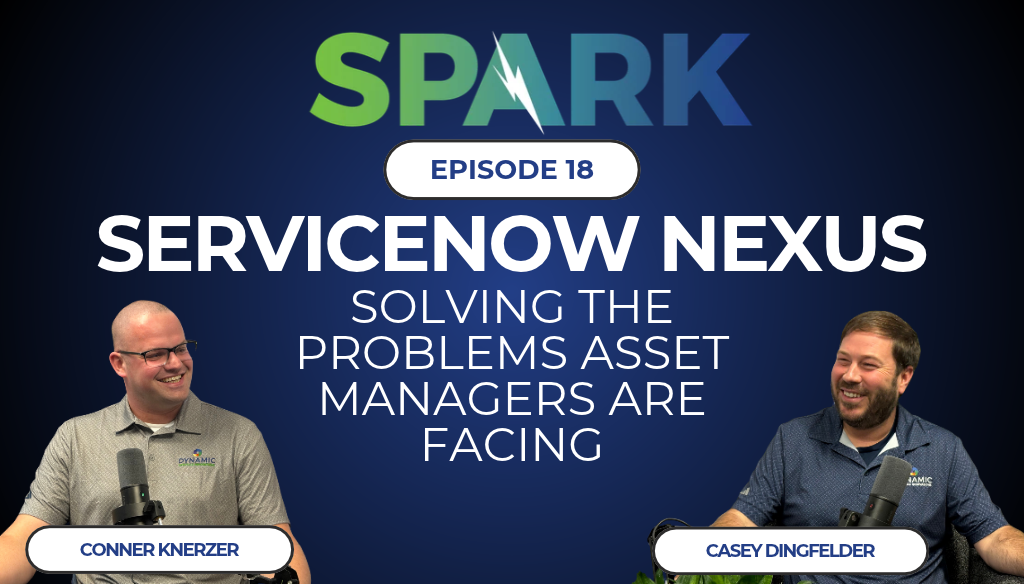
Many organizations have invested in automating their IT asset management workflows, but what happens when technology reaches the end of its lifecycle? For many ITAM teams, disposition data still lives in emails, spreadsheets, vendor portals, and disconnected systems. In this episode of the SPARK Podcast, Casey Dingfelder, VP of ITAD, and Conner Knerzer, Corporate Services Executive at Dynamic Lifecycle Innovations, share key takeaways from ServiceNow Nexus, where they connected with hardware asset managers, software asset managers, and platform professionals about the challenges of managing IT assets through final disposition. From manual status updates to audit preparation and disconnected reporting, the conversation explores why closing the ITAD gap matters and how integrations like Dynamic ITAD Sync can help organizations create a more connected asset lifecycle. In this episode, we discuss:- Key takeaways from ServiceNow Nexus and conversations with IT asset managers
- Why ITAD remains a disconnected part of many asset management workflows
- How manual disposition tracking creates additional work and potential reporting gaps
- The connection between hardware disposition data and software asset management
- How automated integrations can improve visibility, reporting, and audit readiness
- Why organizations should consider the time spent on manual processes when evaluating the total cost of their ITAD programs
- What ITAM and procurement teams should ask when evaluating ITAD partners and integration capabilities
Featuring
Casey DingfelderExecutive Vice President of ITAD
Dynamic Lifecycle Innovations
Conner Knerzer
Coporate Services Executive
Dynamic Lifecycle Innovations
View Full Podcast Transcript
ServiceNow Nexus Podcast Final (00:00)
Welcome to the SPARK Podcast, hosted by Dynamic Lifecycle Innovations, where we break down what happens with your old tech and what this means for you. Today we are joined by Casey Dingfelder and Connor Knerser. Now let’s get started. Hi everyone, and welcome back to this episode of the SPARK Podcast, hosted by Dynamic Lifecycle Innovations. On the Spark Podcast, we aim to help organizations get the most value out of their IT and lifecycle programs.
Recently, our team went to ServiceNow’s Nexus event for asset managers, talking with the people who manage hardware assets inside ServiceNow every day. One theme that we kept hearing about is that the IT asset lifecycle is highly automated right up until an asset is ready for disposal. And that’s what we’re gonna dive into today. Joining me are two guests. We have Casey Dingfelder, the Vice President of ITAD at Dynamic.
And he has over 15 years of industry experience. So welcome, Casey. Thanks for joining us today. Thanks for having me, Caitlin. Yeah. Also, we have Connor Knerzer. He is a corporate services executive at Dynamic and was also at the ServiceNow Nexus event. So, Connor, thank you for joining us today as well. Thanks for having me. Great. Well, we are going to dive right in and talk a little bit more about what you guys learned. So being at the event for asset managers.
What were the key topics of discussion with people who are managing the hardware assets within ServiceNow for their organizations? Yeah, great question. There was over 600 people at the event between hardware asset managers, software asset managers, and platform engineers. And it was really a good opportunity for Casey and I to learn more about how they’re currently using ServiceNow and how our app, Dynamic iTad Sync, can improve their.
current processes. So we did a lot of messaging on the app beforehand to try to connect with a lot of people at the event. And we actually put out a poll and found that zero percent of people that were at the conference had automated workflows that connected their disposition data that they’re getting from their vendor actually into their ServiceNow system. So for us to actually have a solution that kind of bridged that gap was a really cool takeaway for me. Yeah what I learned is just with the software
hardware asset managers, there’s the whole life cycle, there’s a lot for them to track. And so ServiceNow can do a large majority of the front end. But it was pretty clear that as assets would get to their end of life, there just wasn’t a clear connection. So as Connor’s talking, like our app, what it does is it really creates ServiceNow as that system of record. So they can request pickups, they can understand the disposition status at any time where their asset is and then ultimately when we end up recycling or reselling it, that all stays there.
So they’re talking about compliance, they need to report back depending on if it’s a financial industry or healthcare. they get audited and they need to be able to furnish those records of what happened to that asset at the end of life and for it all to be centralized. So just being able to create one one system that’s connected is lot easier on them just than having disparate systems. So yeah. So as you guys are talking, I mean that makes sense with kind of bridging the gap of
What is currently in place for those IT asset managers, those IT teams. And as you said too, zero percent of them, at least that attended the conference, have that solution in place already. So, and I know, Connor, you’ve been in part of our recent speaking engagements too that you’ve hosted about talking about bridging the gap and closing the loop. And you guys have made reference to that even with further conversations that you’re having with individuals.
So what does that refer to when you think of bridging the gap or closing the loop? What does that refer to? And can you explain a little bit more about what the IT asset management teams are facing? Yeah, I can take that one. I kind of think of it as when you order something online, you get status updates right away. Like your order has been placed, it’s been shipped to a warehouse, it’s getting prepared to be delivered to your house, and then ultimately when it’s dropped off on your porch, it’s considered delivered.
About 90% of that asset lifecycle data is already in Asset Manager’s ServiceNow instance. They have that data, but then they have to trust their ITAD partner to actually provide that last 10%. I mean, we view ourselves as really an extension of IT asset management teams. And so it’s on us to be able to properly provide that data to help close the loop. Now, as we were talking about ways we could continue to help our customers and ways that we could innovate, one of the ways
we we one of the things we decided was that if we could have an automated system that could actually go in and update state and substate for these short staffed overworked it asset management teams it would just make that process so much more seamless and so for us to be able to have that automate that last piece of the process is really to help close the loop you’ve got it 90 of the way there you’re trusting us to get it across the finish line so if we
Can if we can avoid those manual steps and be able to change that in your own Service Now instance, it it helps earn time back for your team as well. Yeah, and just to build off that a few conversations that I had when the systems don’t talk to each other in their disparate, they talked about how this one person at the in their organization, it was their responsibility to go in and update their service now instance with the disposition status. And if that person got busy or that person left the company and they forgot to do that, then those assets would
still live active in their system. And then also you just have the human error side. So any time anyone’s gonna take information and try to manually input it, there’s obviously opportunity there for human error. So just by the man or the automated the automated design of what we’re providing, it eliminates some of that human error. So yeah.
I also had the opportunity to learn more about how connected the software asset management side is to the hardware asset teams as well. you know, we predominantly work with hardware asset managers being an IT asset disposition company, but knowing that software asset manag management teams also rely on the hardware data being updated to its final state is really important as well. If there’s a lot of time that goes on between vendors providing that final disposition data.
With software teams having to wait to close out licenses that could be associated with that hardware, it can really add a lot of complexity on the software asset management teams as well. So I think we learned a lot about how connected those teams are and how important it is for those teams to be in lockstep as well. You guys are talking a lot about the manual process that currently lives without having this type of service available for IT teams. And also the fact that, you know, teams are short-staffed potentially. There’s a lot going on.
There’s a lot being developed on the IT side within every organization right now. So thinking about that manual burden that it could resolve and have be a solution for, why do you think certain IT teams haven’t looked at this type of solution yet or made that transition for looking at other resources to make it less manual and make it more automated? Yeah, so I think up until now it’s really the option that they’ve had is to build like a custom API. so that’s what we were doing with a lot of our customers before this.
This really is the ultimate easy button. If you have ServiceNow, you can go on the App Store, you can download the app that we created and it’s already connected. There’s no custom API development. Some of the customers that we’ve had in the past that we talked to about building a custom API, they would they would just honestly blatantly tell us like I can’t get this prioritized intern internally inside my organization. So it’s not an option for them to have the custom API. This is just downloading it right off the ServiceNow store. So it is the ultimate easy button. so there’s been solutions in the past, it’s just been so
Yeah, I’ll piggyback off that as well. we were in Gartner, we were at Gartner Procurement a few weeks ago in San Diego and I met with somebody and as we were we were talking about their IT asset disposition teams, he said that he manages over 80 vendors. And a lot of times, you know, status quo is we hear that all the time when talking with programs that you know if it’s not broke, don’t fix it. programs may be good enough and they may just accept that the process will always be manual because they don’t have time to evaluate
What else is out there? I I also think to answer your question, there really hasn’t been a lot of alternative solutions that exist on the ServiceNow store. we’re one of the first IT asset disposition companies to go to market with a solution like this. that we’ve really seen a lot of interest after releasing this app. Yeah, that’s awesome. And really helpful to know maybe why people haven’t looked into it so far and just what those barriers are. And it’s just that.
The custom route was too much of a workload for them to take on, or potentially, Connor, as you said, too. They didn’t know the options were out there, or there’s not a lot of options out there. So maybe they haven’t had a chance to explore it a lot yet. So that makes sense. Specific to the Dynamic iTadSync app on the ServiceNow store, why did Dynamic really focus on the ServiceNow integration versus other ITAM systems? There’s a stat out there that says about 90% of the Fortune 500 actually uses ServiceNow.
we work with a lot of Fortune five.
Fortune 1000 organizations and so for us to be able to develop an app that already is within the platforms that our customers are already already using is really important. I know there’s flexera, there’s other options that are out there, but a statistic like 90% really stood out when we were designing the app. Yeah, I mean Connor nailed it. The market share that ServiceNow has is just incredible, so it made sense to align with them. Also, now being a partner, it’s pretty apparent ServiceNow is very innovative, they’re gonna continue to
Develop more features and products so that market share is only going to continue to grow or make it that much harder for others to encroach on that. So that aligns highly with how Dynamic operates too. Like we want to constantly innovate. Being at the show, there’s RFID technology that’s coming out to track assets. So how can our app like those are all enhancements that we’re looking to make? so yeah, being at the show just got my brain racing on how we can continue to make our customers’ life easier, and it aligns very similar to like how ServiceNow looks at it too. So yeah.
Early in the conversation, I mentioned that we view ourselves in an extension of your ITAM team. We take that to heart when we want to grow alongside you as well. So as your organizations are experiencing growth and finding ways to innovate and automate processes, we feel it’s our responsibility to do that as well. So for us to be able to, you know, our our app is fantastic, but we’re also in the early stages of developing it as well. We want feedback on it. We want to be able to provide the data that you’re specifically.
Specifically looking for in your instance as well. So to be able to grow alongside you is really important for us in the future as well. So customers that you’re currently working with on the ServiceNow app for dynamic iTadSync, have you heard any initial feedback from them, but just how that’s maybe enhanced their processes, made it easier on them? So any feedback that you’ve gotten so far on having disposal being part of their ServiceNow instance? Yeah, I think the number one
piece of feedback is just time savings. In any RFP or event vendor evaluation process, we’re always looking at what’s the total cost of the program. But I think it’s important to take a step back and figure out how much time your
Teams are spending on manual processes that could be automated as well. so early feedback from my customers and from people that we’ve even talked to at conferences is wow. Like I could have my team working on other priorities if they didn’t have to go in and update this manual. So I think that’s been the biggest piece of feedback I’ve heard so far. Yeah, it’s just the the automation, they don’t need to have a repository of all these C certificates of recycling, certificates of destruction, the the whole disposition status. They don’t have to have everyone trained on
where to store that information because now it’s all inside service now. So it makes it very scalable for them. Again, they don’t have to do a lot of cross-training. So just the automation and just ease of use. I think anytime an organization hears that there’s an audit upcoming or they want to take a closer look at records, it’s important that you know where all of your data lives. You know, one of the
things we’ve we’ve heard from other people as well is like we have multiple vendors that we use. and that makes it even more complicated as well. We understand having, you know, regional partners is could be important to your organization strategy as well. But to be able to have a vendor, especially one vendor, that the bulk of your data is already inside a service now, it prevents you from having to go back through email inboxes to dig up the reporting and really makes that audit process that much easier.
So we’ve learned quite a bit already about the initial conversations, the initial feedback, and what kind of impact it would make for IT teams to have this disposal part of the process for IT asset management within their ServiceNow or in general within their systems. So, what type of advice would you give to a team that is exploring app integration solutions, or even that didn’t know these types of solutions were out there? What advice would you give them? So ITAD has really evolved in the 15 years that I’ve
been in the industry. It used to be just call your ITAD vendor, they come pick up the assets, they take care of the data, recycle, resell.
resale values, like it’s it’s really exploded. So I would strongly encourage every every potential customer out there to evaluate the market, see what’s out there. Look at the Gartner Market Guide. There’s gonna be a ton of good s options there. a lot of us all do the same thing, but then there’s uniqueness, like maybe we offer front end services, maybe there’s highlights on the back that make it easy. I think you’re gonna find that your life can be a lot easier if you’re using the basics. So yeah.
Yeah, and I think it’s just important questions to ask during the evaluation process. now that we’re putting more awareness out there that systems like this actually do exist, I think it’s an important question to ask while you’re talking to partners as well, as far as what kind of solutions do will you be able to provide for our team. the ultimate goal, and again, I’ve we’ve talked about it a lot, IT asset managers are swamped. And we we hear about you know AI and tokenomics now falling onto IT asset managers plates.
as far as you know, managing usage on AI platforms. It’s just another thing that’s getting added to their plate. So I think ultimately it comes down to what can you do for our
team to make to free up time and I think that our app really helps with that. Yeah and I think too when you’re evaluating when you get down to you know your final four when you’re in your RFP process it’s asking the question of like what developments are they working on? Like what’s coming next to see just how innovative they are. Are they going to be stagnant just what they have is what they’re gonna have for the next five years or are they going to continue to develop. I think even ask your internal teams that manage the I the ITAD program, what are their pain points? What kind of challenges are they having? And then turn those into questions in your RFP that you can ask the potential
ITAD vendors of what are you doing for this issue or what’s your solution look like for that. obviously you should be working with a certified company, but even past the certifications, it’s it’s finding out like what how are they gonna make your life easier and once you experience that that’s gonna become your new table stakes and baseline, and then everyone after that’s gonna have to be you know above and beyond. So I think it’s just like Connor said, just keep asking questions and don’t just assume there’s not a solution out there because there’s been quite a bit that’s been developed in the last five years. So yeah.
It’s important too to extend it beyond just IT asset management teams. We also work with sourcing and procurement professionals as well, and you know, thinking about their priorities from a financial standpoint. Again, going back to you know, what’s the total cost of the program, not just the dollar and cents that you’re getting on a revenue share return, but also the time that the teams are spending on it as well. I again, I think is a really important conversation to have.
Thank you so much for sharing that advice and just going over what questions to ask and how people can be looking at their systems to make it a little bit more easier. What’s available to them out in the market to allow them to hit that easy button? As you mentioned, there’s so much being evolved in the industry right now and to be aware of what’s evolved, what’s available to them, and how they can incorporate that into their own systems is really helpful insight. And for all of our listeners out there, thank you so much for joining today and hopefully you gained
A lot of insight from both Casey and Connor, sharing their experience, sharing what conversations they’ve had thus far with IT teams. And if you’re interested in learning a little bit more about how the disposal process can be added to your instance of service now, you can definitely reach out. I’m sure they would both be available to answer any questions that you have about dynamic iTad Sync and probably give a quick five to 10 minute demo so you can see a little bit more about how it can make your lives easier. So
Casey Connor, thank you so much for joining today. Really appreciate you taking the time and we’ll see everybody next time.
Related Resources